Turla: Cyber Espionage in European Government Networks
We analyze the sophisticated cyber espionage campaign by the Turla group targeting European government networks and the defenses needed to stop them.
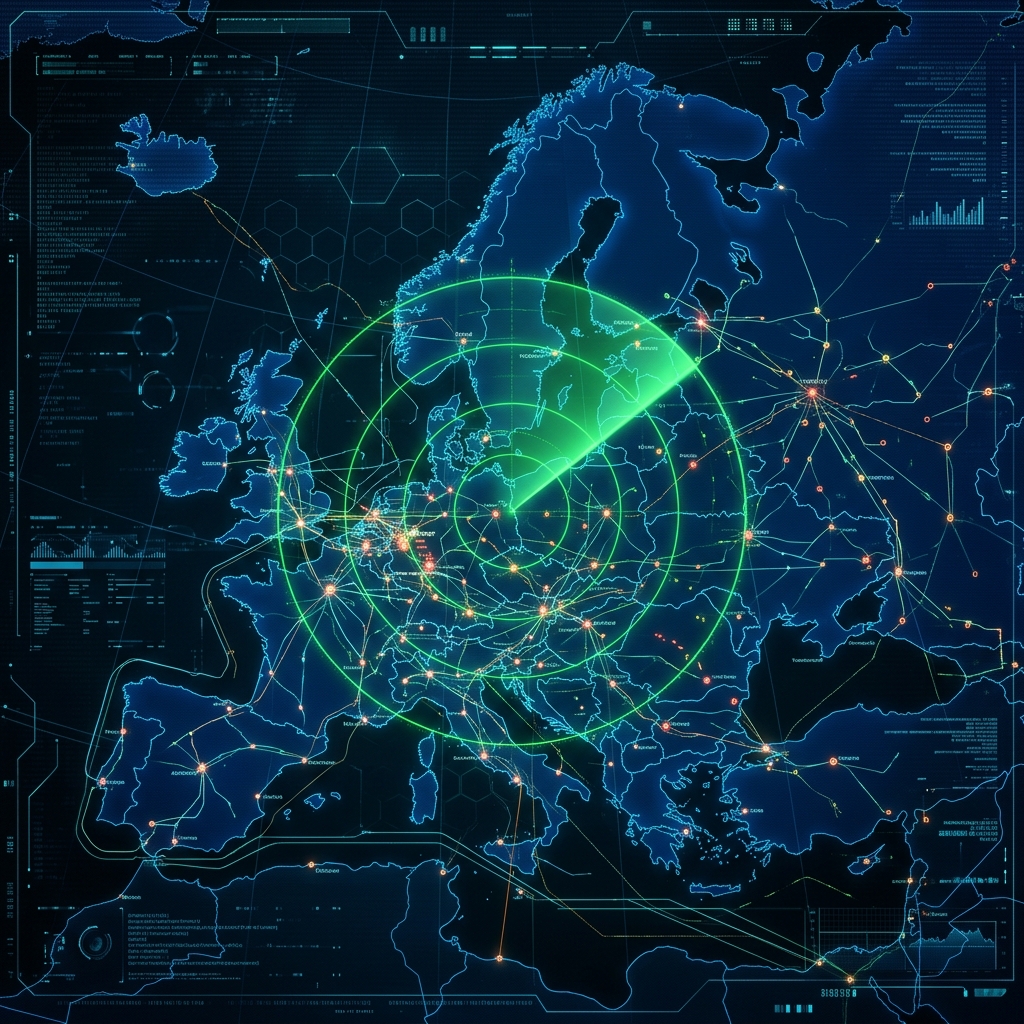
The recent cyber espionage campaign by the Turla group has put incident response teams across Europe on high alert. This threat actor, classified as a state-sponsored advanced persistent threat (APT), has deployed a set of highly complex tactics aimed at infiltrating government networks of the European Union, ministries of foreign affairs, and allied embassies.
Cyber espionage is not a new concept, but the level of evasion and persistence achieved by Turla in this latest campaign sets a worrying precedent in the geopolitics of digital security. In this analysis, we break down the methodologies of this threat actor, examine their updated malware tools, and provide critical guidelines for system administrators to detect and mitigate their presence.
The Profile of the APT Group Turla (Venomous Bear)
The Turla group has been active since the late 1990s and is attributed with some of the most sophisticated espionage cyberattacks in history, including the breach of the United States Department of Defense network in 2008 (Agent.BTZ) and repeated attacks against the German parliament and NATO organizations.
Historically, this group has demonstrated an unparalleled ability to hijack satellite communication channels to hide the physical location of their command and control (C2) servers. In addition, they are known to recursively infect legitimate web servers to turn them into intermediate malware distribution nodes, creating a complex distraction network that makes the attribution of their operations extremely difficult.
Their primary objective is not the destruction of systems or direct financial gain, but the sustained exfiltration of intelligence information, diplomatic documents, confidential emails of government officials, and critical infrastructure blueprints.
Attack Vectors and Techniques Used in 2026
In its latest campaign, Turla has perfected its initial access methods. Although they have exploited vulnerabilities in public-facing exposed software, the primary vector remains targeted phishing or spear-phishing.
The intrusion process follows a highly controlled sequence:
- Exhaustive Reconnaissance: Attackers research the internal structure of ministries and select key employees within foreign policy or IT departments.
- Distribution of Malicious Emails: They send highly personalized emails that simulate official European Union circulars or minutes of bilateral meetings.
- Payload Execution: Attached documents, often compressed PDF files or Word documents with malicious macros, exploit known and zero-day vulnerabilities to silently execute code on the local system.
- Persistence: After the initial compromise, advanced backdoors like Kazuar or Kopiluwak are deployed, establishing secure encrypted communications with the attacker's infrastructure.
Analysis of the Malicious Payload (Malware)
One of the most emblematic pieces of malware used in this campaign is an optimized version of Kazuar, a remote access trojan (RAT) written in .NET. Kazuar has a modular architecture that allows it to download additional extensions depending on the victim's environment.
Below is a simplified example of how the HTTP requests used by the Kazuar agent to communicate with the C2 server are structured, transmitting victim system metadata encrypted in JSON format:
{
  "client_id": "TURLA_UE_MFA_092a",
  "timestamp": "2026-07-15T15:30:00Z",
  "module": "system_info",
  "data": {
    "os_version": "Windows 11 Enterprise",
    "domain_controller": "DC01.GOV.LOCAL",
    "active_processes": [
      "lsass.exe",
      "svchost.exe",
      "outlook.exe"
    ],
    "network_adapters": [
      {
        "interface": "Ethernet0",
        "ip_address": "10.142.12.89"
      }
    ]
  },
  "signature": "ab89ef89c1012903fe56d8d8ff3aee89"
}
This payload is symmetrically encrypted using algorithms like AES or ChaCha20 before being sent over apparently legitimate HTTPS channels, which prevents deep packet inspection (DPI) firewalls from detecting metadata exfiltration in a superficial analysis.
Comparative Table of Turla Group Tools
Turla's arsenal consists of multiple tools adapted to different phases of the intrusion. Below are their main malicious software utilities identified:
| Tool | Malware Type | Communication Vector | Primary Objective |
|---|---|---|---|
| Kazuar | Remote Access Trojan (.NET RAT) | HTTPS / Encrypted C2 API | Obtaining screenshots, executing remote commands, and harvesting memory credentials. |
| Kopiluwak | JavaScript Reconnaissance Tool | HTTP GET/POST Requests | Initial profiling of the victim's system before downloading second-stage malware. |
| Gazer | C++ Persistence Backdoor | Covert channels on compromised sites | Maintaining persistent kernel-level access and evading traditional antivirus detection systems. |
| Snake (Uruburos) | Rootkit / Kernel-level malware | Custom UDP/TCP Protocols | Hiding files, network connections, and high-volume exfiltration processes. |
Defense and Mitigation Measures in Government Networks
To repel sophisticated targeted attacks from Turla, defense teams cannot rely solely on traditional signature-based antivirus solutions. A defense-in-depth strategy is required:
- Rigorous Email Analysis: Implement detection rules that isolate emails coming from external domains with typographical similarity (typosquatting) to official agencies.
- Cryptographic Validation: Enable and strictly audit DKIM signatures, SPF records, and DMARC policies on all incoming mail servers to block identity spoofing.
- Strict Network Segmentation: Limit lateral network movement by separating internal administration systems from those with direct Internet access.
- Outgoing Traffic Monitoring: Analyze unusual traffic patterns to IP addresses of legitimate web servers that may be compromised and used as Turla C2s.
Threat Hunting and Incident Response Playbooks
To effectively combat Turla's intrusion tactics, security operations centers (SOCs) should adopt proactive threat hunting routines rather than relying on reactive alerts. This involves scanning directory paths where the Kazuar malware commonly attempts to hide its components (such as %APPDATA% or system temporary folders) and monitoring Registry run keys (like HKCU\Software\Microsoft\Windows\CurrentVersion\Run) for unauthorized modifications or suspicious persistence payloads.
Organizations must also perform memory analysis to detect processes with signs of DLL injection or process hollowing, which are frequently used by Turla's sophisticated loaders to execute code under the guise of legitimate system binaries (such as svchost.exe or explorer.exe). Establishing a robust incident response playbook ensures that in the event of a breach detection, affected endpoints can be isolated instantly from the rest of the network, preventing lateral movement and minimizing the volume of exfiltrated data. Additionally, network analysts should monitor outgoing DNS queries for newly registered domains that exhibit pattern characteristics of automated generation algorithms (DGAs).
How to Audit Your Communications with TecnoCrypter Tools
Most incidents caused by the Turla group begin with a malicious email simulating legitimacy. To mitigate this breach, you can use our Email Analyzer, a web tool that allows you to paste the technical headers of any suspicious email to evaluate the authenticity of the originating servers, check DKIM cryptographic signatures, and validate SPF and DMARC compliance without sending your data to external servers.
To delve deeper into the technical analysis of email threats, read our article on how to analyze email headers to detect phishing and spoofing. Additionally, to understand the mathematical and hybrid foundations behind the secure communications encryption that attackers attempt to bypass, you can review our manual on symmetric vs asymmetric encryption and hybrid systems.
Summary of Key Security Takeaways and Actionable Guidelines
To maintain highest standards of operational resilience and cybersecurity compliance across corporate systems, organizations must adopt a proactive security stance. Continuous security testing, strict threat modeling, automated auditing pipelines, and adherence to established international frameworks (such as NIST FIPS PUB 180-4, OWASP recommendations, and CISA advisories) form the cornerstone of modern digital protection.
By systematically applying least-privilege principles, cryptographically verifying data assets, and isolating high-risk compute workloads within zero-trust boundaries, security teams can effectively mitigate emergent threats while sustaining long-term technological innovation.
Conclusion
The Turla group cyber espionage campaign in European Union networks highlights the persistent threat posed by state-sponsored cyber groups. The combination of email social engineering attacks and silent modular payloads requires government organizations and private sector enterprises to adopt a proactive cybersecurity posture. Regularly auditing email, keeping systems patched, and using local analysis tools is crucial to resisting modern corporate and state espionage.
Sources and Recommended Readings:
- Wikipedia: Turla (APT group) — Detailed historical information about the group's origin and campaigns.
- ENISA (European Union Agency for Cybersecurity) — Reports and guidelines on APT threats and mitigation in EU infrastructure.
- Related post on TecnoCrypter: How to Analyze Email Headers to Detect Phishing
- Related post on TecnoCrypter: The Battle for Confidentiality: Symmetric vs Asymmetric Encryption